Contents
What's Coming to MYOB Acumatica Manufacturing? Scheduling, Shop Floor and AI
For Australian manufacturers, reliable delivery dates depend on more than customer demand. Materials must be available, production capacity must be realistic, shop floor information must be accurate and managers need to recognise problems early enough to respond.
The international Acumatica 2026 R2 release, announced for October 2026, highlights developments in advanced production scheduling, Shop Floor Kiosk functionality, material planning, project manufacturing and AI-assisted reporting. These are capabilities we expect to see considered for forthcoming MYOB Acumatica releases, subject to MYOB's Australian release plans.
For manufacturers, the important question is not simply what new features are arriving, but how they could improve production commitments, shop floor accuracy, inventory investment and operational decision-making.
Advanced Planning and Scheduling: Plan Around Real Capacity
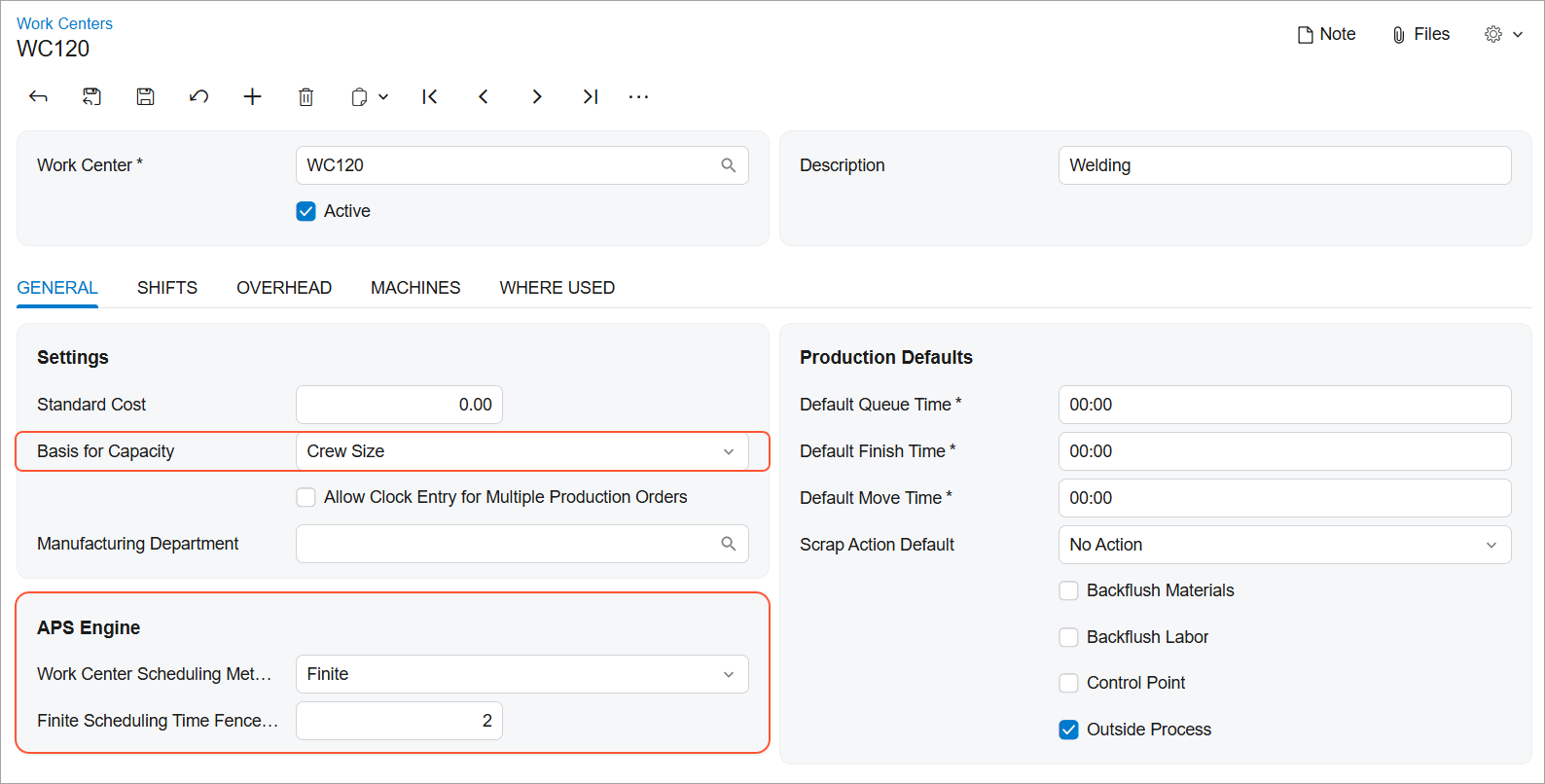
A production order may look achievable until machine availability, shift patterns, labour constraints and competing jobs are considered. Acumatica 2026 R2 introduces an enhanced Advanced Planning and Scheduling (APS) engine designed to address those constraints more directly.
Capabilities announced for the international release include:
- Forward and backward scheduling.
- Finite and infinite capacity logic within a production order.
- Scheduling against work centre calendars, shifts, breaks, holidays and efficiencies.
- Updated operation dates and sequencing as plans change.
- Visibility into the material implications of scheduling decisions.
What this could mean for manufacturers: Consider an urgent order requiring welding and assembly. The materials may be available, but the welding work centre is already committed. More capacity-aware scheduling could help planners identify a realistic completion date, understand the bottleneck and respond to changing priorities without repeatedly rebuilding spreadsheets.
The potential benefit is more credible delivery commitments and better use of constrained production resources.
Shop Floor Kiosk: More Work Completed at the Point of Production
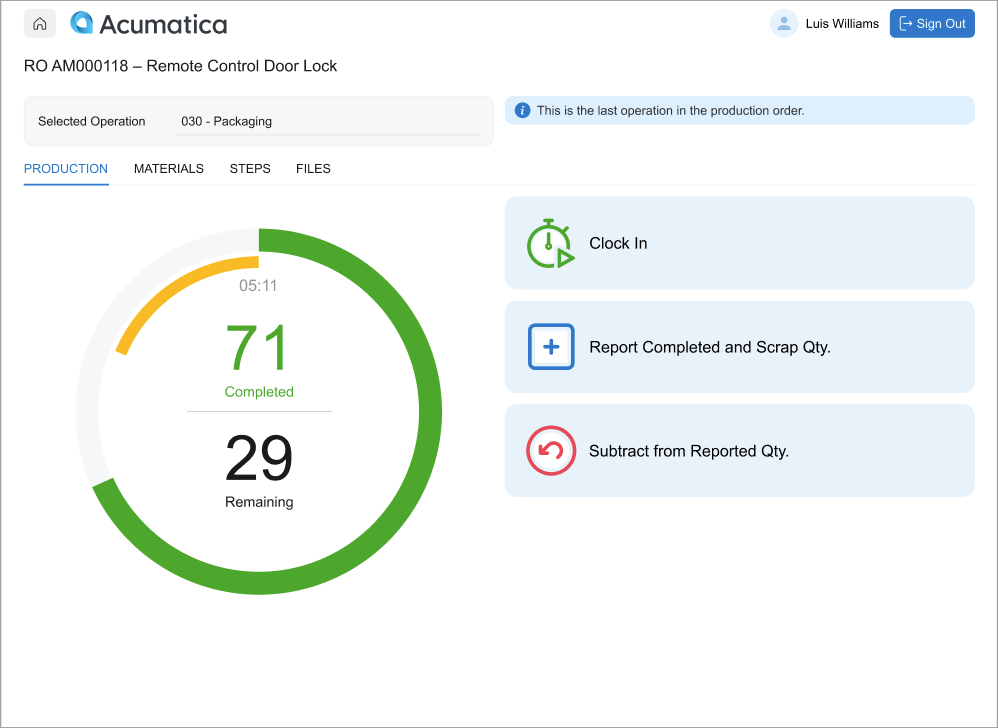
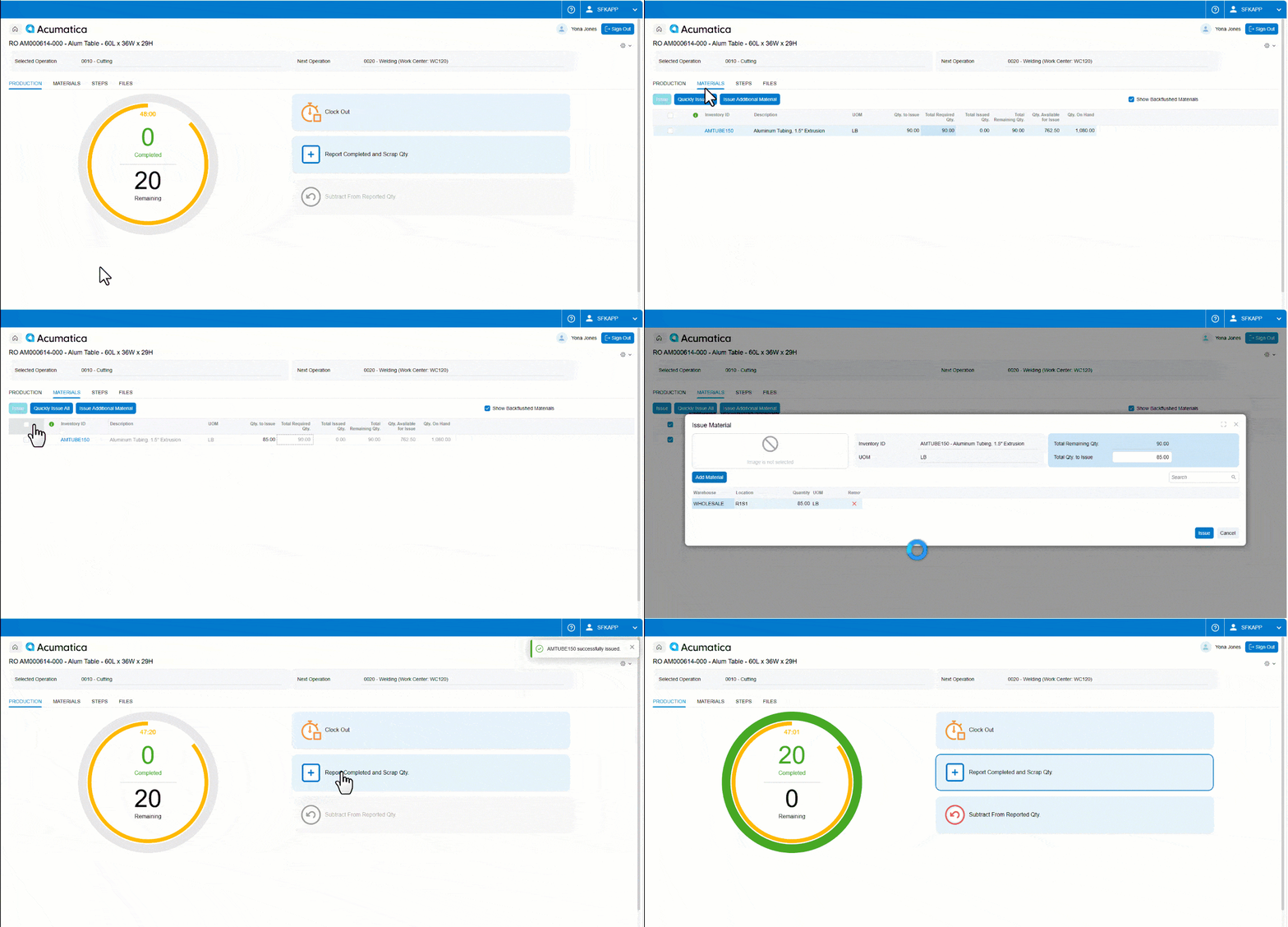
The Shop Floor Kiosk already provides a simpler way for production employees to record labour, completed quantities and scrap. The international 2026 R2 announcement describes additional functions that would bring more material and production reporting into the same operator experience.
Expected enhancements include:
- Issuing materials directly to a production operation.
- Recording substitute materials and consumables used on a job.
- Correcting production transactions within the kiosk.
- Entering and searching lot and serial attributes during production reporting.
What this could mean for manufacturers: If an operator uses an approved substitute component, recording that change at the workstation rather than later in the office could improve material accuracy and traceability. It may also reduce the time supervisors spend correcting production records.
The opportunity is to capture what was actually made and consumed, where the work happens.
For the current kiosk capabilities and implementation considerations, see our article MYOB Acumatica Shop Floor Kiosk: Smarter Production Reporting.
AI for Manufacturing: Identify Exceptions Before They Become Problems
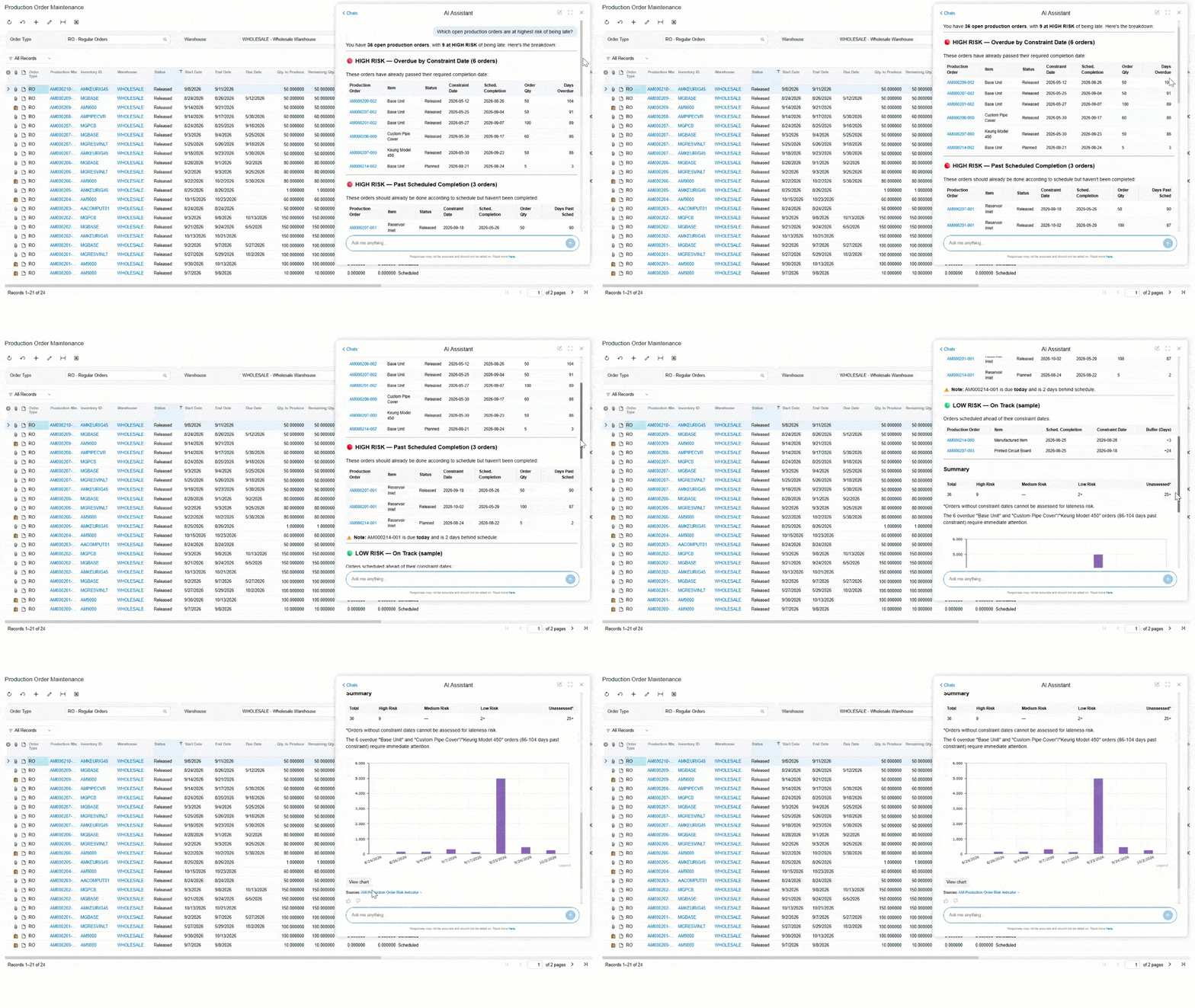
Production managers often need answers that sit across several reports: Which jobs are slipping? Which work centres need materials? Which orders could exceed their planned cost?
Acumatica 2026 R2 announces four manufacturing-focused Generic Inquiries intended to provide relevant information to its AI Assistant:
- Schedule performance: production orders trending early, on time or late.
- Material needs by work centre: components required at each work centre and when.
- Production order risk: released orders potentially at risk of late completion or cost overruns.
- Production orders by build capability: production context organised by the capabilities required to build the product.
What this could mean for manufacturers: A production manager could ask which jobs need attention today and use information from the underlying ERP inquiries to investigate exceptions, rather than assembling several separate reports first. The usefulness of these answers will depend on data quality, access permissions and the AI capabilities made available in MYOB Acumatica.
The goal is not AI for its own sake; it is helping managers find operational exceptions while there is still time to act.
Project Manufacturing: Connect Project Demand to Production
Manufacturers producing specialised equipment or assemblies against customer projects need to coordinate project requirements with purchasing, materials and production orders.
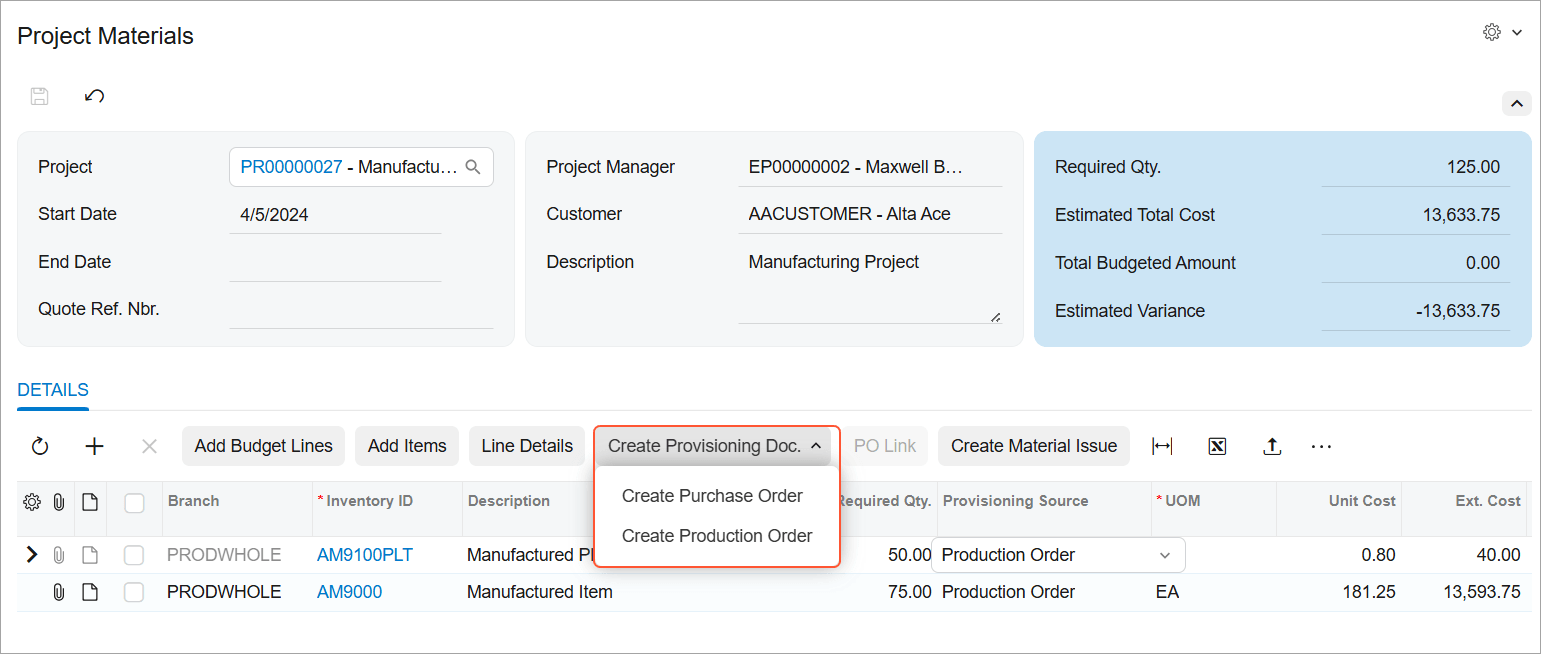
The international release describes the ability to mark project material lines for manufacturing, create production orders from those requirements and carry relevant project, task, quantity, required-date and cost-code details into production.
What this could mean for manufacturers: An engineer-to-order business could identify a fabricated assembly required for a project and initiate its production from the project material requirement, maintaining a clearer link between the customer project and the manufacturing work undertaken to fulfil it.
MRP and Inventory Replenishment: Match Stocking Rules to Real Demand
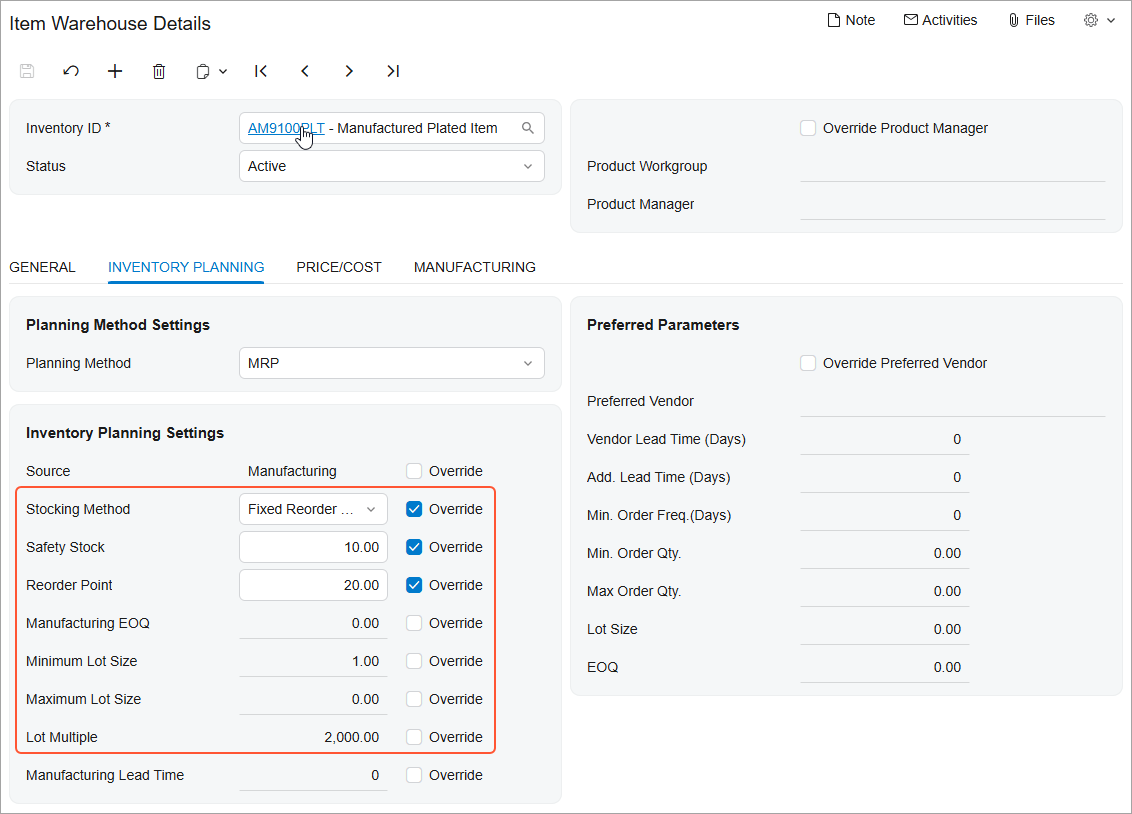
Manufacturers need enough stock to protect production without tying up unnecessary working capital. The forthcoming MRP and DRP refinements distinguish safety stock from reorder-point replenishment and provide more flexible item-level stocking methods.
For example, a critical imported component may justify a safety-stock buffer, while a frequently consumed item may be better replenished when stock reaches a reorder point, with an order sized to restore inventory to a defined maximum.
What this could mean for manufacturers: More appropriate planning rules for different materials could reduce avoidable shortages while limiting overstock. The practical benefit will depend on accurate lead times, demand assumptions and item planning settings.
Reporting and Analytics: Make Operational Information Easier to Use
Beyond manufacturing-specific functions, Acumatica 2026 R2 announces improvements to Generic Inquiries, including stored inquiry results, scheduled or on-demand refresh, grouped table views and additional reporting security controls.
What this could mean for manufacturers: Reports spanning production, inventory, purchasing and finance could become easier to retrieve and analyse. These capabilities also provide a stronger information foundation for AI-assisted operational questions, subject to appropriate configuration and access controls.
Customer Delivery Commitments: Connect Production and Fulfilment
The international release also highlights enhancements to Available-to-Promise (ATP) calculations for order management. These use projected supply and demand to help determine when the full order quantity can be shipped.
For manufacturers that also distribute finished goods, this may improve customer conversations about availability and delivery dates. ATP and production scheduling remain distinct processes: one evaluates projected inventory availability, while the other plans manufacturing work and capacity.
For more on the wider order-to-fulfilment process, read From Order to Fulfilment: How MYOB Acumatica Connects Sales, Inventory and Warehouse Operations.
AI Automation and the Wider ERP Platform
The release also describes AI agents triggered by defined business events and controlled read-only access to selected ERP inquiries through Model Context Protocol (MCP) servers. For manufacturers, these platform developments may eventually support more proactive exception monitoring and workflow automation.
Any automation affecting purchasing, inventory, production or finance should be evaluated with appropriate approval controls, access permissions and monitoring. Availability and licensing within MYOB Acumatica remain to be confirmed.
What Manufacturers Should Consider Now
The emerging direction is clear: scheduling is becoming more capacity-aware, shop floor transactions more immediate, replenishment more flexible and manufacturing information easier to interrogate.
For existing MYOB Acumatica customers, this is an opportunity to review current production processes and identify which potential enhancements would deliver the most practical value. For businesses evaluating a replacement manufacturing ERP, it is another reason to consider the platform's future direction alongside its current capabilities.
Manufacturing ERP should connect what needs to be made, what resources are available, what is happening on the shop floor and what it means for customers, costs and profitability.
For the wider manufacturing platform, see Smarter Manufacturing with MYOB Acumatica: From Planning to Production.
Important: Australian Release Availability
This preview is based on the international Acumatica 2026 R2 announcement, which lists October 2026 availability for Acumatica. It does not confirm that every described feature is available in MYOB Acumatica in Australia. MYOB release timing, included functionality, licensing, deployment and configuration requirements should be confirmed against MYOB's Australian documentation.
How Cloud Factory Can Help
Cloud Factory works with Australian manufacturers to evaluate, implement and optimise MYOB Acumatica across production, materials planning, inventory, warehouse management and finance.
Whether you are planning an upgrade or comparing manufacturing ERP solutions, we would welcome the opportunity to discuss your requirements, review the announced developments and assess which capabilities may be relevant to your business. Manufacturers evaluating NetSuite, Plex, Pronto, Epicor, SYSPRO, IFS, Infor or SAP S/4HANA should also consider including MYOB Acumatica on their shortlist.