
Shopify Integration for Microsoft Dynamics 365 Business Central
For organisations reviewing their eCommerce architecture at a high level, the key question is not simply whether Shopify can connect to Business Central — it is how that integration should be configured to support product management, stock visibility, order processing, pricing and operational control. Microsoft’s connector supports these core integration areas and can also support more advanced scenarios such as multi-store connections and Shopify B2B catalogue pricing.
Why connect Shopify and Business Central?
Shopify provides a strong online commerce experience, while Business Central supports financial management, inventory, sales, service and operations. Bringing the two together helps reduce manual rekeying, improve visibility and create a more consistent process from online order capture through to fulfilment and financial control.
Microsoft describes the connector as enabling synchronisation of orders, stock and customer information to help businesses fulfil orders faster and better serve customers.
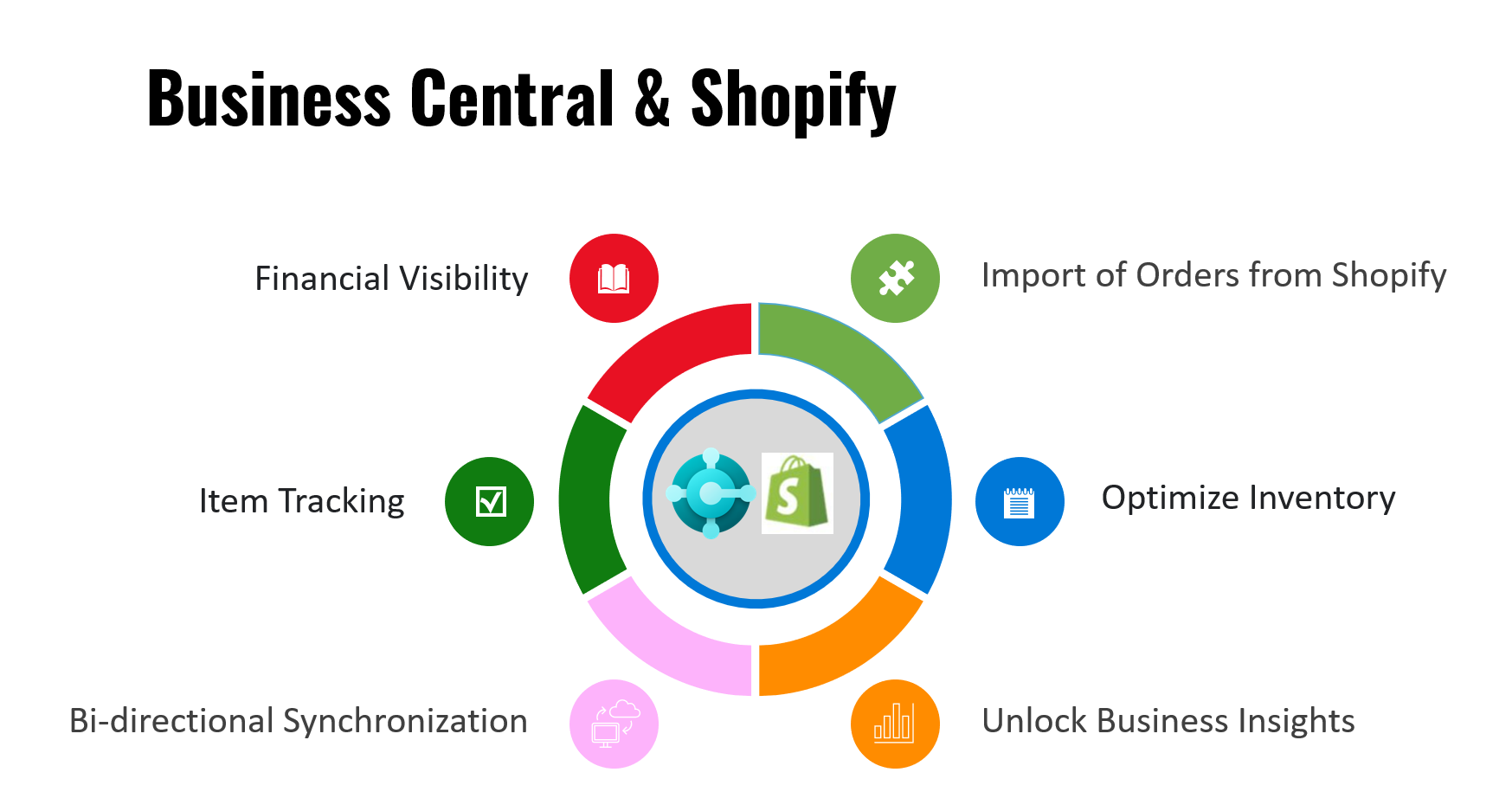
What the Shopify Connector can support
At a high level, a Shopify and Business Central integration can support:
- Synchronisation of online orders into Business Central
- Customer data alignment between Shopify and Business Central
- Product and variant synchronisation
- Inventory availability updates to Shopify
- Synchronisation of images and pricing
- Support for fulfilment and downstream order processing in Business Central
This means your eCommerce channel can be more closely connected to your ERP operations, rather than functioning as an isolated front-end sales platform. Once Shopify orders are imported, Business Central can create the related customer and sales order records and support further fulfilment, planning and warehouse processes.
Typical business benefits of Shopify Integration
Better order flow
Online orders captured in Shopify can be imported into Business Central, helping reduce duplication and manual administration.
Improved stock visibility
The connector supports sending inventory levels to Shopify, which can help present more accurate stock availability online. Microsoft’s walkthrough also shows support for mapping Shopify locations and enabling inventory sync for selected locations.
More controlled product data
Business Central can act as a source for item data including names, descriptions, images, prices, availability, variants, vendor details and barcodes, depending on how the integration is configured.
Better operational alignment
Once orders reach Business Central, they can flow into broader ERP processes including fulfilment, planning, purchasing, warehousing and financial processing.
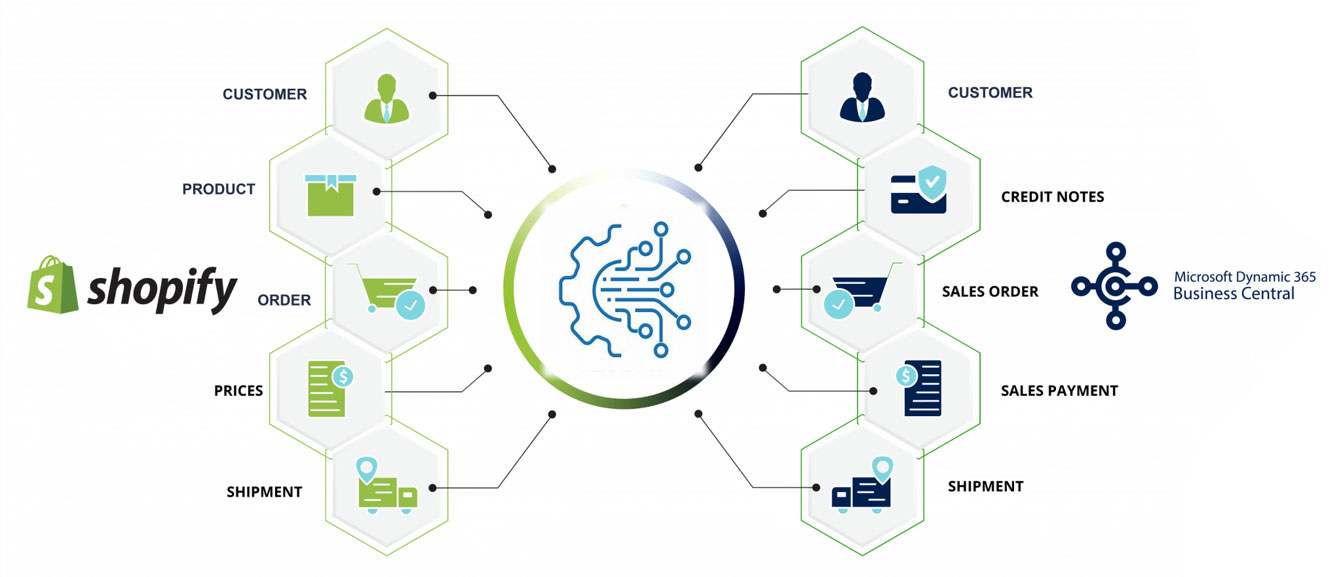
Key Considerations for Shopify and Business Central Integration
A successful Shopify integration is not only about connecting the two systems. It also requires decisions around:
- Where product data should be mastered
- How SKUs and variants should be mapped
- Which inventory locations should publish availability online
- How orders should be created and processed in Business Central
- How shipping, payments and tax settings should align
- Whether multiple Shopify stores are involved
Microsoft’s setup guidance shows that businesses can connect multiple online shops to Business Central and configure the shop connection from within Business Central.
Advanced scenarios
For organisations with more complex requirements, the Microsoft documentation also points to broader capability including:
- Support for multiple Shopify shops connected to Business Central
- More detailed product and variant mapping strategies using SKU, barcode or item/variant structures
- B2B catalogue pricing and discount synchronisation for Shopify B2B scenarios
These are the areas where implementation design becomes especially important, because the connector may be standard, but the operating model of each business is different.
Shopify and Business Central Integration Overview
Integrating Shopify with Microsoft Dynamics 365 Business Central enables organisations to connect their online sales channel with core ERP processes including inventory, customer management, order processing and financial control. Rather than operating as separate systems, Shopify and Business Central can work together to provide better visibility across sales, stock and fulfilment, while reducing manual administration and improving data consistency.
The Microsoft Shopify Connector provides a structured foundation for synchronising orders, products, customers and inventory between platforms. However, the effectiveness of the integration depends on how it is designed—particularly in areas such as product ownership, pricing, fulfilment workflows and inventory management.
Speak with Cloud Factory
If you are reviewing Shopify integration with Business Central, Cloud Factory can help you assess the right approach based on your business model, operational requirements and growth plans.
Request a complimentary ERP and eCommerce review to discuss how Shopify and Business Central can be configured to support your organisation.
Book a Complimentary ERP Assessment
Book a complimentary ERP assessment with Cloud Factory to review your current systems, identify operational gaps and determine the right solution to support your business growth.