Skip to content

How to Choose an ERP System in Australia

Choosing the right ERP system is one of the most important decisions for a growing organisation. With multiple platforms, vendors and implementation approaches available, selecting the right solution requires a clear understanding of your business requirements, operational complexity and future growth plans.

Cloud Factory helps Australian organisations navigate the ERP selection process with structured advisory services, ensuring the right platform is chosen, implemented successfully and aligned to long-term business outcomes.



When Should You Consider a New ERP System

Many organisations continue to operate on accounting software and disconnected business systems long after they have outgrown them. While these systems may still function, they often introduce inefficiencies, limit visibility and create operational risk as the business grows.

A modern ERP platform becomes necessary when your existing systems can no longer support the complexity of your operations, provide timely and accurate reporting, or scale with your business. Recognising these signs early allows organisations to move from reactive decision-making to a more structured and strategic ERP transformation.

Common indicators that it may be time to consider a new ERP system include:

Outgrown accounting software

Your current system was designed for basic financial management but now struggles to support multi-entity structures, inventory, projects or operational workflows.

Multiple disconnected systems

Critical business processes are spread across spreadsheets, legacy tools and separate applications, resulting in duplicated data, manual workarounds and increased risk of errors.

Lack of reporting visibility

Generating accurate, real-time insights into financial and operational performance is difficult, often requiring manual consolidation and limiting your ability to make informed decisions.

Manual processes

Key workflows such as invoicing, approvals, inventory updates or reporting rely heavily on manual intervention, reducing efficiency and increasing the likelihood of errors.
Key Factors When Selecting an ERP System

If your organisation is experiencing one or more of these challenges, it may be time to undertake a structured ERP readiness assessment to determine the most appropriate path forward.

Cloud Factory helps organisations evaluate leading ERP platforms including SAP Business One, MYOB Acumatica and Microsoft Dynamics 365 Business Central together ensuring the right solution is selected based on your business requirements, industry and growth plans. 

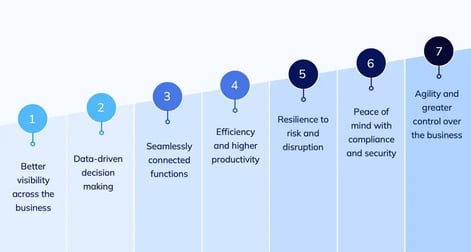
Key Factors When Selecting an ERP System 

Selecting the right ERP system requires more than comparing features or pricing. It involves understanding how your organisation operates today, how it will evolve in the future, and ensuring the chosen platform can support both operational and financial requirements.

A structured ERP selection process considers a number of critical factors to ensure the solution aligns with your business strategy, industry needs and long-term growth objectives.

Business Size & Complexity

ERP systems vary significantly in their ability to support organisational complexity. 

Factors such as multi-entity structures, project-based operations, inventory management and regulatory requirements all influence the suitability of a platform.

Selecting a system that aligns with your current scale — while allowing for future growth — is essential to avoid unnecessary complexity or the need for early replacement.


Industry Requirements

Different industries have unique operational needs that must be supported by the ERP platform. Manufacturing businesses require production planning and bill of materials, while wholesale distributors need advanced inventory and warehouse management. Construction and project-based organisations require strong project accounting capabilities.

Ensuring the ERP system aligns with industry-specific processes reduces the need for customisation and improves long-term success.


Integration Requirements

Most organisations operate multiple systems across finance, operations, eCommerce, CRM and reporting. The selected ERP platform must integrate effectively with existing systems or replace them where appropriate.

A well-defined integration strategy ensures data flows seamlessly across the organisation, reduces manual processes and supports a single source of truth.


Scalability & Future Growth

An ERP system should support not only your current operations but also your future growth. This includes the ability to expand into new locations, add users, support additional business units or introduce new product lines.

Choosing a scalable platform avoids the need for reimplementation as the business evolves.


Cloud vs On-Premise Deployment

Modern ERP systems are increasingly cloud-based, providing greater flexibility, accessibility and reduced infrastructure requirements. However, some organisations may still require specific deployment models based on regulatory, security or operational considerations.

Understanding the advantages and limitations of each approach ensures the chosen ERP platform aligns with your organisation’s IT strategy and risk profile.

ERP vs Accounting Software & Add-Ons

Many organisations begin with accounting software supported by spreadsheets and add-on applications to manage operations such as inventory, CRM or project tracking. While this approach can work in the early stages, it often becomes increasingly complex and inefficient as the business grows.

An ERP system takes a fundamentally different approach by providing a single, integrated platform that connects financial management with operational processes across the organisation. This eliminates the need for multiple disconnected systems and enables real-time visibility across the business.

Accounting Software with Add-Ons

Accounting software is primarily designed to manage financial transactions such as general ledger, accounts payable and accounts receivable. To support broader business functions, organisations often rely on additional systems or manual processes.

This typically results in:

  • Multiple systems managing different parts of the business
  • Data duplication and reconciliation challenges
  • Limited visibility across operations
  • Increased reliance on spreadsheets
  • Higher risk of errors and inconsistent reporting

Over time, this approach can create operational inefficiencies and make it difficult to scale.

ERP Systems

ERP systems are designed to unify finance, operations and customer data within a single platform. Rather than integrating multiple tools, ERP provides a central system where all business processes are connected.

This enables:

  • A single source of truth across the organisation
  • Real-time reporting and visibility
  • Integrated financial and operational workflows
  • Automation of key business processes
  • Improved scalability and control

ERP systems support growing organisations by providing the structure and visibility required to manage increasing complexity.

As organisations grow, the limitations of accounting software and add-ons become more apparent. Moving to an ERP platform enables greater control, visibility and efficiency across the entire business. 

Cloud Factory helps organisations transition from accounting software to modern ERP platforms such as MYOB Acumatica, Microsoft Dynamics 365 Business Central Wiise and SAP Business One, ensuring the solution aligns with both operational and financial requirements. 

ERP Integration

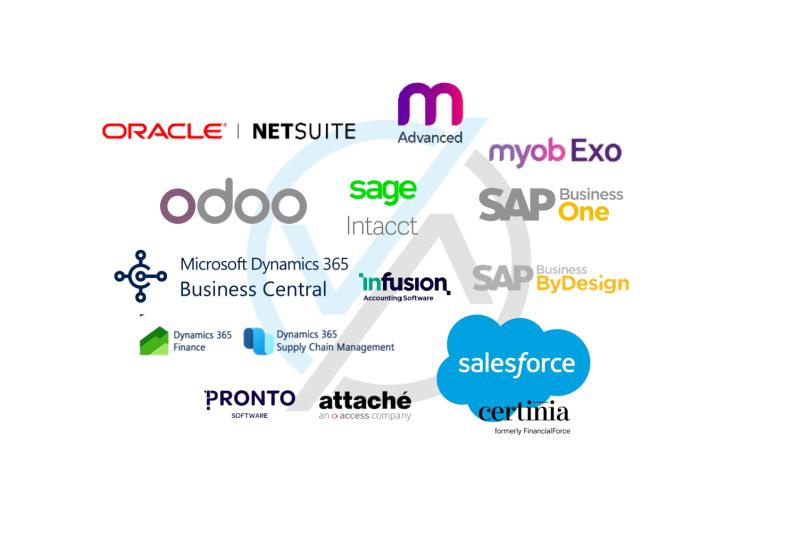
Understanding the ERP Software Landscape 

There are many ERP platforms available in the market, each designed to address different business sizes, industries and levels of operational complexity.

While this landscape can appear complex, most Australian mid-market organisations will typically evaluate a smaller group of leading platforms that provide the best balance of capability, scalability and local support.

Common ERP Platforms

 Leading ERP Platforms for Australian Organisations 

Cloud Factory works across a range of ERP technologies; however, for most Australian organisations, platforms such as Microsoft Dynamics 365 Business Central, Wiise, MYOB Acumatica and SAP Business One represent the most widely adopted and proven solutions for managing finance, operations and growth 

Common ERP Platforms in Australia

Common ERP Platforms in Australia

A number of established ERP platforms are widely adopted by mid-market organisations in Australia. Each platform offers different strengths depending on business size, industry requirements and operational complexity.

Understanding the differences between these platforms is an important part of the ERP selection process, ensuring the chosen solution aligns with your organisation’s structure, processes and long-term growth plans.


Microsoft Dynamics 365 Business Central

Microsoft Dynamics 365 Business Central is a cloud-based ERP platform designed for small to mid-sized organisations seeking strong financial management combined with seamless integration into the Microsoft ecosystem.

It is particularly well suited to organisations already using Microsoft 365, Power BI and the broader Microsoft stack, enabling enhanced reporting, automation and productivity.

Key strengths include:

  • Strong financial management and reporting
  • Integration with Microsoft tools such as Excel, Outlook and Teams
  • Scalable cloud platform with flexible deployment
  • Extensive partner ecosystem and extensions

MYOB Acumatica

MYOB Acumatica is a modern cloud ERP platform designed for growing Australian and New Zealand businesses that require flexibility, scalability and strong operational capabilities.

It is well suited to organisations with more complex operational requirements, including distribution, manufacturing, construction and project-based environments.

Key strengths include:

  • Flexible cloud architecture with consumption-based licensing
  • Strong capabilities across financials, distribution and project accounting
  • Industry-specific functionality for construction and manufacturing
  • Real-time visibility across financial and operational data

SAP Business One

SAP Business One is an established ERP platform designed for small to mid-sized organisations that require robust financial control and operational management within a single system.

It is widely used across a range of industries and is known for its stability, structured processes and strong inventory and distribution capabilities.

Key strengths include:

  • Comprehensive financial and operational functionality
  • Strong inventory and warehouse management
  • Proven platform with a large global user base
  • Flexible deployment options including cloud and on-premise

 Each of these platforms offers distinct advantages depending on your business requirements. A structured ERP selection process ensures the chosen solution aligns with your operational needs, industry and long-term strategy. 

Common ERP Selection Mistakes

Selecting an ERP system is a significant business decision, and mistakes made during the evaluation process can lead to increased costs, implementation challenges and long-term operational limitations.

Understanding common pitfalls helps organisations approach ERP selection with greater clarity and confidence.

Choosing Based on Price Alone

Focusing solely on upfront software or implementation cost can lead to selecting a system that does not meet operational requirements or support future growth.

ERP should be evaluated based on overall value, including functionality, scalability, implementation approach and long-term return on investment.


Underestimating Implementation Effort

ERP implementation is not just a technology project — it involves process design, data migration, user adoption and organisational change.

Underestimating the effort required can result in delays, budget overruns and reduced business outcomes.


Ignoring Integration Requirements

Failing to consider how the ERP system will integrate with existing applications such as CRM, eCommerce, payroll or reporting tools can create data silos and manual workarounds.

A clear integration strategy is essential to ensure seamless data flow and a single source of truth.


Lack of Internal Alignment

ERP projects often fail when there is insufficient alignment between stakeholders across finance, operations and management.

Ensuring clear objectives, defined requirements and internal buy-in is critical to selecting and successfully implementing the right solution.

Avoiding these common mistakes is a key part of a structured ERP selection process and significantly improves the likelihood of a successful implementation. 

Optimise

How Cloud Factory Helps

Selecting and implementing an ERP system is a complex process that requires both technical expertise and a deep understanding of business operations. Cloud Factory provides structured ERP advisory and implementation services to help organisations make confident, informed decisions and successfully deliver ERP outcomes.


ERP Advisory

Cloud Factory works with organisations to assess their current systems, identify operational challenges and define clear ERP requirements. This ensures the selection process is guided by business needs rather than software features alone.


ERP Readiness Assessment

A structured readiness assessment evaluates your organisation’s processes, systems and data to determine your preparedness for ERP. This provides clarity on scope, risks and the most appropriate path forward.


ERP Vendor Selection

Cloud Factory helps organisations evaluate and compare leading ERP platforms, ensuring the selected solution aligns with your industry, operational requirements and long-term strategy.


ERP Implementation

From planning through to deployment, Cloud Factory supports ERP implementation with a structured and practical approach, ensuring the system is delivered successfully and aligned to business objectives.

Book your ERP Systems Review

Free Initial Assessment

Book a free initial assessment with us where we understand your business problem and suggest a solution which suits you best and ensures growth for your business.

Book Your Solution Workshop
Request More Information