Contents
From Order to Fulfilment: How MYOB Acumatica Connects Sales, Inventory and Warehouse Operations
For growing distributors, wholesalers and product-based businesses, processing an order is rarely as simple as entering a sales order and shipping the goods.
Every customer order can trigger a chain of operational decisions. Is the stock available? Does inventory need to be replenished? Which warehouse should fulfil the order? What needs to be picked, packed and shipped? Has the supplier commitment been accounted for? And how does all of this flow through to invoicing, cash flow and financial reporting?
When these processes operate across separate systems, spreadsheets or manual workflows, increasing transaction volumes can quickly create unnecessary administration, errors and delays.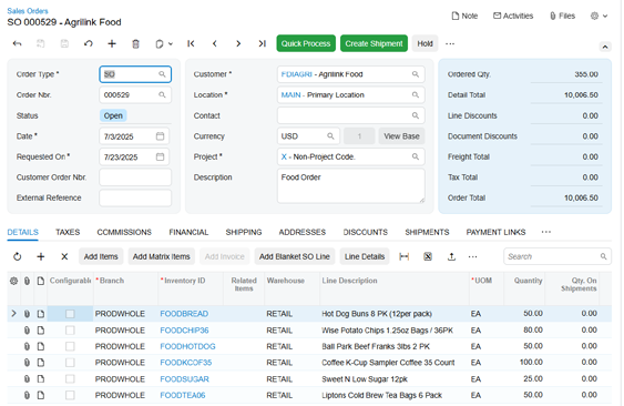
MYOB Acumatica brings sales order management, purchasing, inventory, warehouse management and financial processes together within a connected cloud ERP platform.
Manage Sales and Purchasing in One Connected Process
MYOB Acumatica provides tools to create, track and approve purchase orders while maintaining visibility over costs and vendor commitments.
On the sales side, businesses can manage customer orders using flexible pricing and discounting while coordinating the fulfilment process.
The advantage isn't simply faster order entry. Information entered at the beginning of the process becomes part of the operational and financial workflow that follows.
That reduces the need for teams to continually re-enter information or reconcile disconnected systems as an order progresses through the business.
Know What Inventory You Have – and What You'll Need
Effective order fulfilment depends on accurate inventory information.
MYOB Acumatica provides real-time inventory tracking alongside replenishment and forecasting capabilities designed to help businesses balance product availability against excess stock.
Inventory management capabilities include:
- Real-time inventory visibility.
- Inventory replenishment and forecasting.
- Lot and serial number tracking.
- Kitting and disassembly.
- Multi-warehouse inventory management.
- Inventory analytics to help improve stock turns and reduce carrying costs.
This becomes particularly valuable as a business expands across products, locations or warehouses. Instead of inventory planning happening independently from sales activity, purchasing and fulfilment, each becomes part of the same operational picture.
Take the Process into the Warehouse
A connected ERP shouldn't stop at the warehouse door.
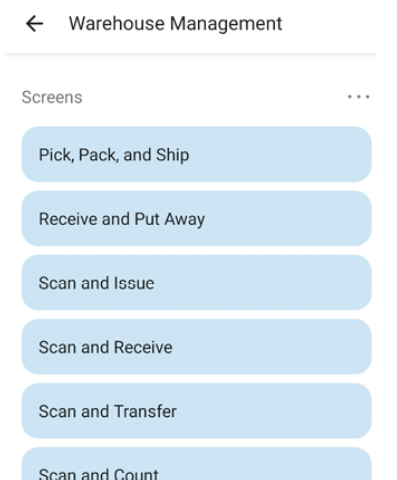
MYOB Acumatica's warehouse management capabilities extend the process into receiving, picking, packing and shipping, with mobile access, barcode scanning and guided workflows.
Warehouse processes can include:
- Pick, Pack and Ship.
- Receive and Put Away.
- Scan and Issue.
- Scan and Receive.
- Scan and Transfer.
- Inventory counting and stock movements.
Real-time tracking and barcode-enabled processes can help warehouse teams fulfil orders more efficiently while reducing manual errors.
Rather than treating warehouse execution as a separate activity, MYOB Acumatica connects what is happening on the warehouse floor with the sales, purchasing, inventory and financial processes occurring elsewhere in the business.
Connect Quote-to-Cash and Procure-to-Pay
The value of connected order management becomes clearer when individual transactions are considered as part of complete business processes.
Quote-to-Cash
On the customer side, MYOB Acumatica can support quote-to-cash processes covering quoting, sales orders, approvals, fulfilment, invoicing and collections.
Procure-to-Pay
On the supply side, procure-to-pay processes can incorporate planning and replenishment, vendor requisitions, purchase orders, approvals, receiving, supplier invoices and payment.
Time-phased planning and replenishment tools can help optimise purchasing decisions, while workflow automation can reduce manual processing and improve accuracy.
The objective is not simply to automate individual transactions. It is to connect the processes that sit between customer demand, supply, fulfilment and cash.
Connect Operations to Finance
Every operational transaction ultimately has a financial consequence.
MYOB Acumatica integrates financial management with the wider ERP environment, including accounting, invoicing, payments, approvals, cash management, expenses, profitability and budgeting.
Real-time dashboards provide visibility into financial information alongside the underlying business activity.
For management, this can provide a much clearer relationship between what is happening operationally and its impact on financial performance – without waiting for information to be consolidated from separate operational systems.
Create a Complete View of the Customer
Order management also forms part of the wider customer relationship.
MYOB Acumatica's integrated CRM capabilities connect marketing, sales and customer support while providing visibility into customer interactions.
This means sales and service teams can work with customer information in the context of the transactions and operational activity occurring elsewhere within MYOB Acumatica.
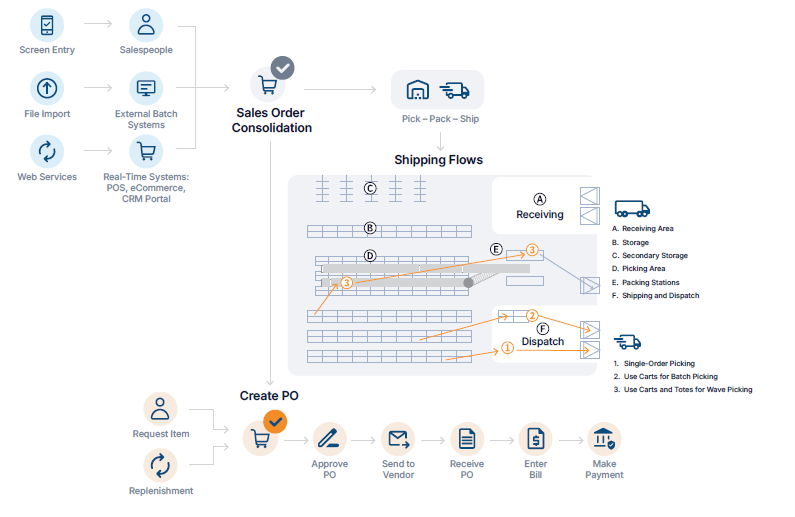
From Customer Demand to Cash
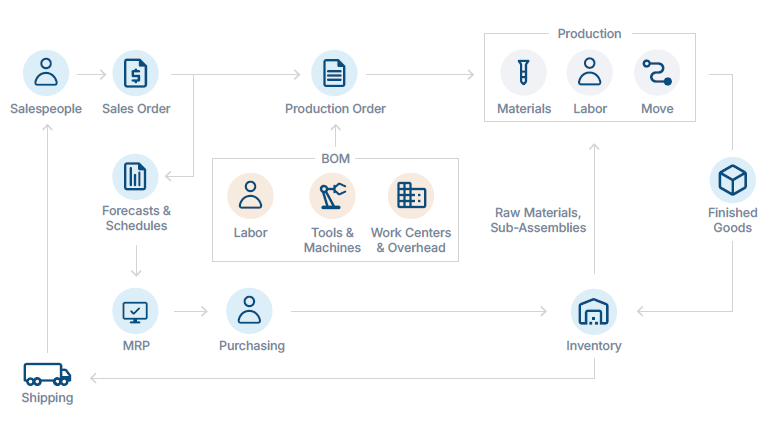
For distributors and inventory-intensive businesses, the real opportunity is to move away from viewing sales orders, purchasing, inventory and warehouse management as separate processes.
A connected workflow can instead look like:
Customer Demand → Sales Order → Inventory Availability → Replenishment → Purchasing → Warehouse Execution → Shipment → Invoicing → Payment
Each stage creates information required by the next. When those processes operate within the same ERP environment, businesses can reduce manual intervention, improve visibility and establish more consistent processes as transaction volumes increase.
More Than Order Management
This is why we don't see order management as simply a function for entering and processing sales orders.
The bigger question is how effectively a business can connect customer demand with inventory, purchasing, warehouse execution, fulfilment and finance.
MYOB Acumatica provides a cloud ERP platform through which those processes can operate together, giving businesses greater visibility over both the operational and financial consequences of each transaction.
For a growing distribution business, the objective isn't simply to process more orders. It is to build an operational platform capable of scaling with the business.
How Cloud Factory Can Help
Cloud Factory helps organisations evaluate, implement and optimise MYOB Acumatica across finance, sales, purchasing, inventory, distribution and warehouse management.
Rather than looking at individual ERP functions in isolation, we work with businesses to understand the complete operational process and determine how MYOB Acumatica can be configured to support it.
If you're looking to improve order management, inventory control or warehouse operations, talk to Cloud Factory about whether MYOB Acumatica is the right fit for your business.