Skip to content

Distribution in Microsoft Dynamics 365 Business Central

Distributors often struggle with disconnected systems, limited inventory visibility and manual processes that make it difficult to manage purchasing, stock levels, fulfilment and customer service effectively.

Microsoft Dynamics 365 Business Central brings distribution operations into a single, integrated ERP platform—enabling organisations to manage inventory, purchasing, warehousing, sales and financial outcomes with greater control and real-time visibility.

With a connected view across stock, demand, supply and fulfilment, distributors can improve service levels, reduce inefficiencies and support more informed operational and financial decision-making.

Why Businesses Implement Business Central for Distribution

As distribution businesses grow, managing inventory, purchasing, warehousing and fulfilment across disconnected systems becomes increasingly difficult. Manual processes, poor stock visibility and weak alignment between operations and finance can lead to delays, stockouts, excess inventory and reduced customer service performance.

Many mid-market distributors implement Microsoft Dynamics 365 Business Central to bring inventory, supply chain and financial data together within a single ERP platform—providing a more accurate and connected view of distribution operations in real time.

This integrated approach enables organisations to:

  • Improve inventory visibility with real-time access to stock levels, movements and availability across locations
  • Strengthen purchasing and replenishment control by aligning supply decisions with demand and inventory requirements
  • Enhance fulfilment efficiency through better coordination of warehouse activity, order processing and dispatch
  • Reduce manual processes and inefficiencies by connecting distribution, inventory and finance within one system
  • Support better operational decision-making with timely, reliable information across the distribution lifecycle

For many distributors, embedding inventory and fulfilment processes within ERP provides a scalable foundation for growth—improving control, service and visibility without relying on disconnected systems.
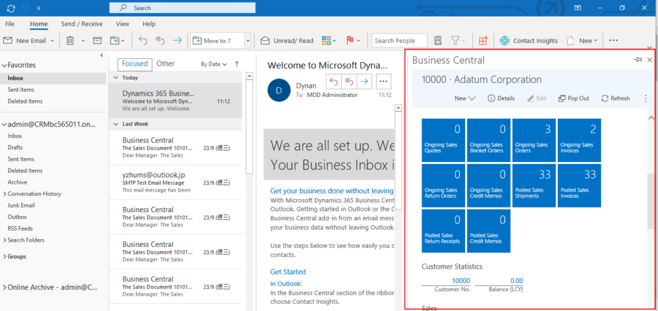
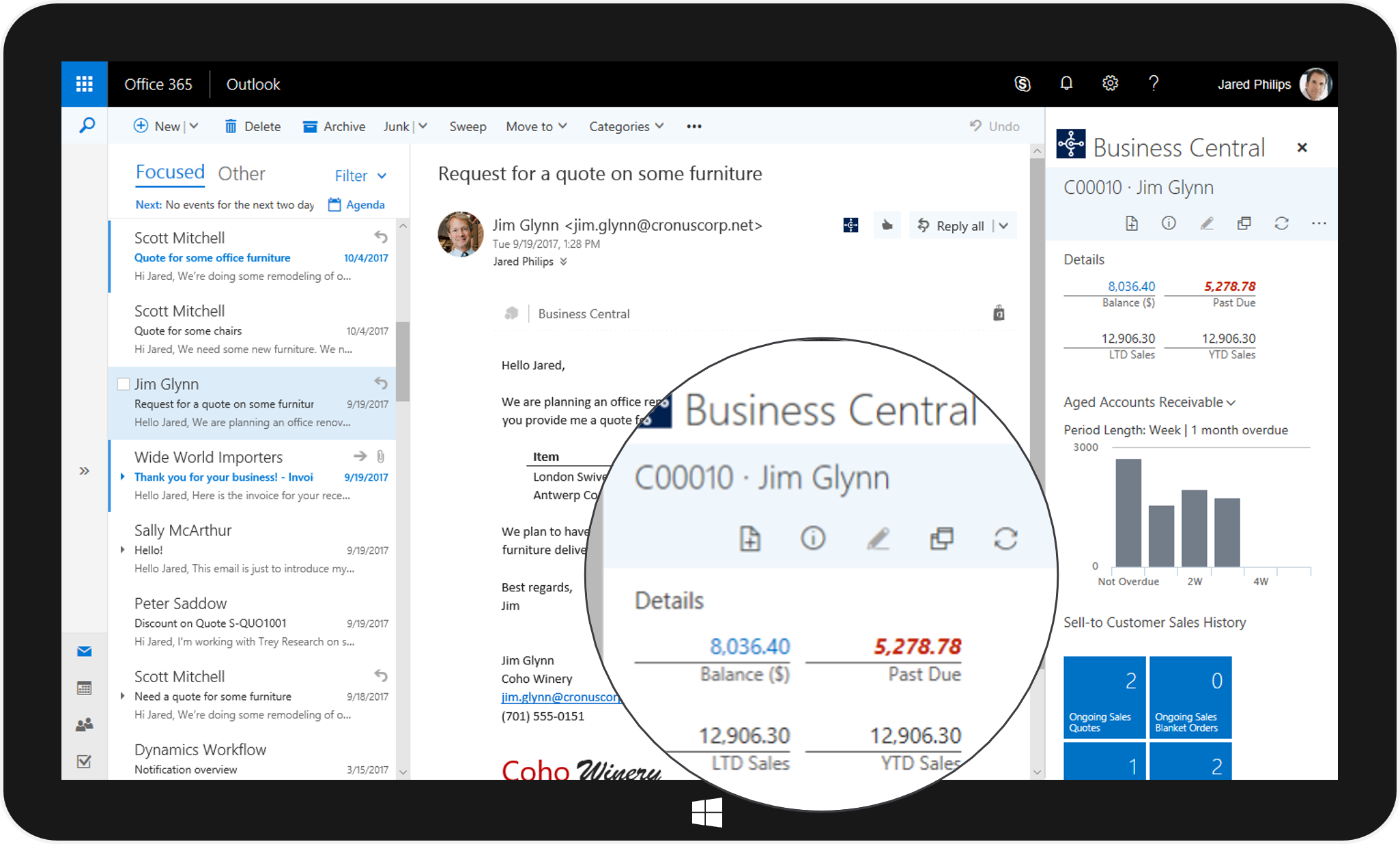
Outlook for Business Central Integration


Key Distribution Capabilities in Business Central

Microsoft Dynamics 365 Business Central provides a range of distribution capabilities designed to improve inventory visibility, purchasing control and fulfilment efficiency—fully integrated with financial and operational processes.

These capabilities enable distributors to manage stock, suppliers and customer orders while maintaining real-time alignment across the entire supply chain.

Inventory Management and Stock Visibility

Maintain accurate, real-time visibility of inventory across locations, including warehouses, branches and transit—supporting better stock control and availability.

Purchasing and Supplier Management

Manage purchasing processes from requisition through to supplier orders and receipts, ensuring materials and products are available to meet customer demand.

Demand Planning and Replenishment

Align purchasing and stock levels with demand using planning tools that help reduce stockouts, minimise excess inventory and improve service levels.

Warehouse and Fulfilment Operations

Support warehouse processes including receiving, picking, packing and dispatch—improving accuracy and efficiency in order fulfilment.

Sales Order and Customer Fulfilment

Manage customer orders from entry through to delivery, ensuring accurate fulfilment and improved customer service performance.

Integration with Financial and Operational Processes

Connect distribution activity directly with financials, purchasing and inventory—ensuring all stock movements, orders and transactions are reflected in real time across the business.

Distribution and Financial Management Integration

One of the key advantages of managing distribution operations within Microsoft Dynamics 365 Business Central is the direct integration between inventory, purchasing, sales and financial management—eliminating the need for manual reconciliation and disconnected systems.

By connecting stock movements, supplier transactions and customer orders with ERP, organisations can ensure that all distribution activity is accurately reflected in financial data in real time.

This integrated approach enables organisations to:

  • Improve margin visibility with accurate tracking of product costs, purchasing and sales performance
  • Align inventory and financial data to provide a clear, real-time view of stock value and movement
  • Streamline financial reconciliation by connecting purchasing, inventory and sales transactions directly with accounting processes
  • Enhance cash flow management with better visibility into receivables, payables and inventory investment
  • Support more informed decision-making with real-time operational and financial reporting across the business

When Business Central is a Strong Fit for Distribution

Microsoft Dynamics 365 Business Central is particularly well suited to distribution businesses that require greater visibility, control and integration across inventory, purchasing, warehousing and financial processes.

It is often a strong fit for organisations that:

  • Operate across multiple warehouses or locations and require real-time inventory visibility
  • Are outgrowing entry-level systems such as MYOB or Xero and need more structured processes
  • Require integration across finance, operations and sales within a single ERP platform
  • Need improved control over purchasing, stock and fulfilment to support service levels and efficiency
  • Are planning for growth, scale or multi-entity expansion

For organisations with more complex warehouse or fulfilment requirements, Business Central can also be extended through integrated warehouse management solutions—supporting more advanced operational needs within a connected ERP environment.

Warehouse Management and Industry Extensions

A key strength of Microsoft Dynamics 365 Business Central is its ability to integrate with specialist solutions that extend core ERP capabilities—particularly in areas such as warehouse management, logistics and customer engagement.

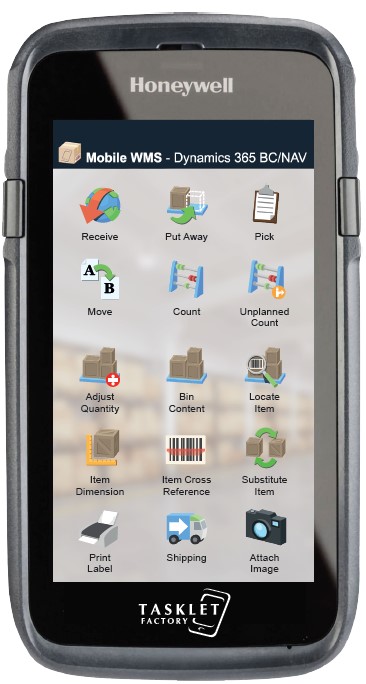
For many distribution businesses, warehouse execution is a critical area for improvement. While Business Central provides strong inventory and warehouse functionality, advanced processes such as mobile scanning, directed picking, landed cost control and real-time warehouse execution are typically enabled through integrated extensions and warehouse management solutions.

Cloud Factory works with leading platforms aligned to Business Central, helping organisations improve picking accuracy, streamline warehouse operations and gain real-time visibility across stock movements, fulfilment processes and distribution performance.

Tasklet
Business Central with Office 365

Review Your Distribution ERP Approach

For many distributors, operational challenges become most visible when inventory, purchasing, warehousing, sales and financial systems are not properly connected—resulting in stock issues, fulfilment delays, manual workarounds and limited visibility across the business.

Reviewing your distribution systems is often the first step toward improving stock control, strengthening fulfilment performance and gaining more accurate insight into margins, inventory investment and operational efficiency.

At Cloud Factory, we work with distribution businesses to assess how inventory, suppliers, warehouse activity and financial data are currently managed—identifying opportunities to streamline operations, improve visibility and support scalable growth.

Whether you are looking to improve inventory control, connect warehouse processes more effectively with ERP, or replace disconnected systems with a more integrated platform, our advisory-led approach ensures the solution is aligned to your business requirements, not just software functionality.

Book a Complimentary ERP Assessment

Book a complimentary ERP assessment with Cloud Factory to review your current systems, identify operational gaps and determine the right solution to support your business growth.